Preparing for your first fresh grad interview

Accepting an invitation from the Placement Cell of XIME Kochi, I, along with six other HR professionals, conducted mock interviews with the 2025 MBA batch on September 20, 2025. Each of the HR professionals was allotted 9-10 students, and the interviews spanned around 3.5 hours in total. We gave individual feedback to students in respective panels, post which all students and panellists gathered, where the HRs shared their wisdom.

I shared a few pieces of instructions. A couple of students approached me after the session, asking if I could write down what I had spoken about or create a video on it. Hence, this article.

XIME Mock Interview Sep 20, 2025
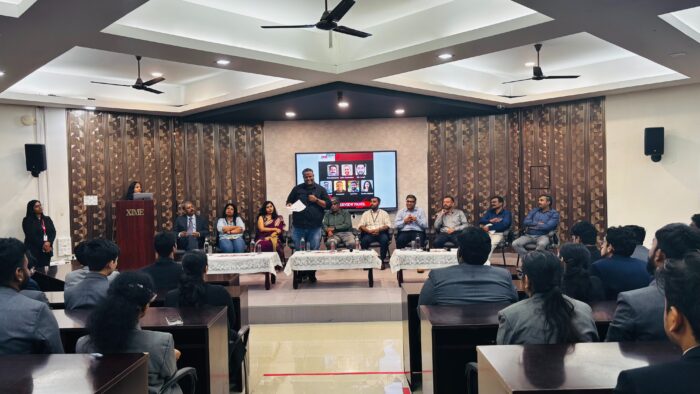
Interactive Session after the Mock Interviews on Sep 20, 2025 at XIME Kochi

To those experienced professionals: there is nothing new in here. This is just basic wisdom and hence scroll away.

To fresh grads: there is nothing in this article that is not available on the web. But in case this helps you be better candidates, that’s gratifying to me.

  1. Research the organisation thoroughly
    • Read the company’s website and recent news.
    • Understand competitors and industry trends.
    • Look for past interview experiences online (LinkedIn, Glassdoor, etc.).

  2. Analyse the Job Description
    • Break it into required skills, responsibilities, and behavioural traits. Use ChatGPT or similar tools extensively for this purpose.
    • Map your college projects, internships, school/college event management or club activities, and skills to these requirements. Leadership experience, if any, write it first.
    • Prepare responses showing how you fit the role.

  3. Master your resume
    • Be ready to explain every point on the resume in detail. Expect a drill-down of whatever you have written on the resume.

  4. Prepare for Behavioural Event Interviews (BEI)
    • Research the potential behavioural competencies for the role you have applied for.
    • Use the STAR method (Situation, Task, Action, Result) approach in your responses
    • Keep answers structured and concise (1–2 minutes max). Do not talk forever; the interviewer may lose interest or lose track.
    • Prepare at least 5–6 STAR stories covering the behavioural competencies for the role, from your personal life, school/college life, and internship stint.

      Some common (not exhaustive) competencies for entry-level roles are:
      • Teamwork and collaboration
      • Conflict resolution
      • Leadership and initiatives during school/college
      • Handling failures
      • Problem-solving under pressure
      • Achieving results with limited resources

  5. Build a strong LinkedIn profile (7-star checklist) + Connect/Network with the right people
    • Professional profile picture. No selfies, please.
    • Headline aligned with your career goals
    • Customised vanity URL (linkedin.com/in/yourname)
    • Strong “About” section with career goals + skills
    • Internship experience listed with bullet points and results
    • Skills endorsed + recommendations from teachers/internship managers
    • Active engagement: post insights, share/write articles, comment meaningfully. You do not need to perform the cringe LinkedIn actions to be visible.
    • Watch this video from Jeff Su.

  6. Customise your resume for each application
    • Highlight the most relevant experiences based on the JD.
    • Keep it concise: ideally 1 page. In PDF, unless specified. Name the file appropriately.
    • Use a professional email ID (ir0ckbutImbad@gmail.com is a no-no)
    • Start with a Summary at the top, rather than a Career Objective. The summary should give an idea of your background to the interviewer in less than 5 sentences. This is, also your selling pitch.
    • Include LinkedIn URL and any other portfolio URLs at the top of the resume
    • Customise your resume for the JD (do not lie, though). Use ChatGPT or similar tools to understand the keywords in a JD and use the relevant (and what you actually have) in your resume.
    • There are a zillion videos on YouTube that tell you how to prepare a resume properly. I personally recommend videos by Jeff Su, or Ali Abdaal. Watch their videos on resume writing, creating LinkedIn profiles, networking, and more.
    • Include a cover letter only if specifically asked for.

  7. Prepare for common HR questions
    • Why MBA/BTech/whatever your course is? Why your specialisation/this role/organisation?
    • Career goals (short-term and long-term).
    • “Tell me about yourself” in 60 seconds. This is your elevator pitch to sell yourself. Do not waste this opportunity. Do not spend time on irrelevant details about you during this time.

  8. Get ready to ask questions at the end
    • Prepare 1-2 thoughtful questions for the interviewer. This need not always be about the salary or location of the job.
    • Example: How does this role contribute to the company’s strategy?

  9. Practice interview delivery
    • Speak clearly, avoid filler words to the extent possible (umm, like). You will need to practise this; it is not an overnight success that you can achieve.
    • Maintain eye contact, upright posture, and a positive tone. Dress for the occasion.
    • Listen carefully before answering. You can take time to think (Steve Jobs style!)
    • Admit honestly if you don’t know something, but show willingness to learn. And be genuine.
XIME Kochi Mock Interview Panelist HRs 2025.09
XIME Kochi Mock Interview Feedback 2025.09
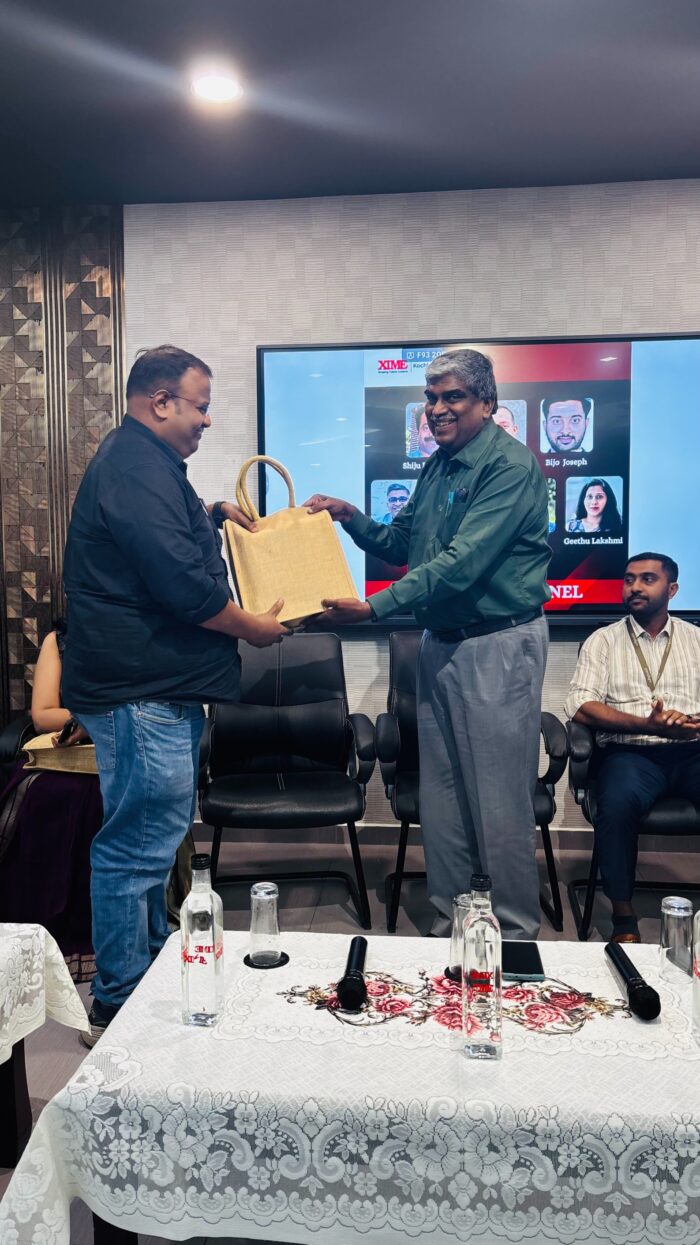
Arunanand T A (HR Bro) receiving a memento from Prof. A S Girish XIME Kochi
Arunanand T A (“HR Bro“) receiving a memento from Prof. A S Girish XIME Kochi

Also published on LinkedIn.

A definitive guide on not assessing in just 10 seconds if a candidate is hireable

“It comes with experience. I can tell if a candidate is hireable within the first ten seconds of my interaction”, I heard a senior HR professional say this three years ago when I was eavesdropping at the break time of an HR conference in Hyderabad. I was still fresh on the job, with hardly one year of experience, and I wished if I could be like him one day.

Fast forward to 2021. I couldn’t still be like him. I read a few human behaviour books in the interim, read about body languages, did a formal course on BEI and watched some TED/TEDx videos on the subject since interviewing is one of my favourite things to do. As yet, that’s a dream not come true, and I wish it stays that way.

Back in college days

I come from the middle part of Kerala state and went to undergrad college in a nearby district. I was a hosteler where we had inmates from all across the state. Those who know Malayalam would know that the way Malayalam is spoken differs almost every 100km within the state. I had a friend from Malabar region whom I heard, on the first day on phone, speaking to his mom, “Ningal evide poyathanu?” (verbatim: Where did you go?). The word ‘ningal‘ (=you) is treated as a word without respect, except probably in a formal setting, in my area of living. One would easily get offended if I would use that word.

I was assuming that my friend was angry with his mom and I did ask him if everything was alright. To my surprise, he was all cool. When probed, he told me that it is common to use that word, without any lack of respect, in the Malabar region. That was sort of a cultural shock for me. The life thereafter was full of such cultural shocks, different ideas, fighting over ideologies, settling for compromise, understanding that people would have different opinions and that the world is no binary. That understanding, maybe, comes with age and experience.

Each candidate is a story book that’s not to be read in 10 seconds.

Then why?

Every person’s story is different. Very unique in every aspect. We know our story. We may know a few others’ stories as well. That does not mean that we know every story. Humans have a tendency to look for patterns in everything they pursue. We are like a machine learning algorithm where there are preset stories (knowledge so far) which we try to match with the new entrant. Unless and until we have sufficient data to classify the new entrant, the algorithm will fail. That classification is the learning process, which needs sufficient data to process.

Hence it is very important that we provide sufficient time hearing people out. This is the only basic step to remove our own biases in the evaluation processes. We need to hear people out. We should look for what they have done in the past, and most importantly why they have done those, and try to extrapolate it to what can be done. This process takes time and this is why I don’t digest when one says they can assess if a candidate is worth hiring in the first 10 seconds itself!

Interviewer is not a machine, nor is the candidate

Both are humans. Even the most learned machines need at least a dozen inputs to identify patterns for an evaluation. Then how can a human being, with their very limited knowledge—howsoever big one would assume it to be—understand a candidate in a few seconds? That would mostly be a biased opinion, I may think.

As both the candidate and the interviewer are not machines, we need to listen. A candidate may be late to the interview, they may have dirt on their dress, their language may not be perfect, their hair may not be combed, they may have had a gap in their career—how would one know what’s the story behind it without them telling us? What if they have a story that will justify these? If an interviewer is suddenly decides on the hirability of a candidate, that’s way too unjustifiable for the very same reason.

Way forward

Tech interviewers may have a different reason to identify if a candidate is suitable for a role faster, but HR interviewers should spend sufficient time to listen to stories of the people. Candidates are adults with a totally different life story than ours. This is exactly why some great companies have thorough and sufficiently long interview practices, even if the candidate may possibly seem a bit off in the first few minutes. HR interviewer’s responsibility lies in traversing through the story to see if there is a new story the candidate can build at your company. Past predicts the future and history is not a subject learnt in 10 seconds.

Click to Tweet this article People First HR

Also published on LinkedIn and Medium

error: Content is protected!!