Preparing for your first fresh grad interview

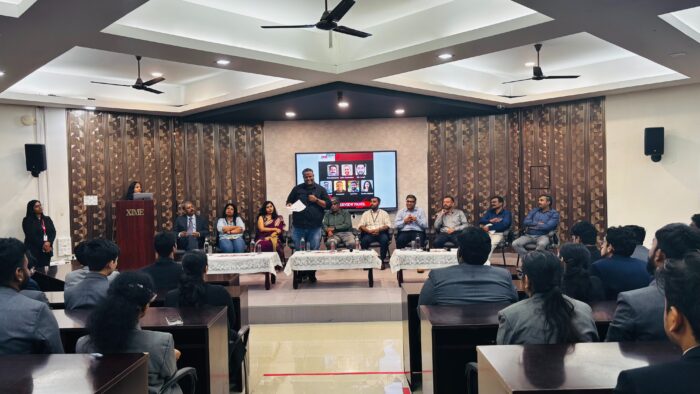
Accepting an invitation from the Placement Cell of XIME Kochi, I, along with six other HR professionals, conducted mock interviews with the 2025 MBA batch on September 20, 2025. Each of the HR professionals was allotted 9-10 students, and the interviews spanned around 3.5 hours in total. We gave individual feedback to students in respective panels, post which all students and panellists gathered, where the HRs shared their wisdom.

I shared a few pieces of instructions. A couple of students approached me after the session, asking if I could write down what I had spoken about or create a video on it. Hence, this article.

XIME Mock Interview Sep 20, 2025
Interactive Session after the Mock Interviews on Sep 20, 2025 at XIME Kochi

To those experienced professionals: there is nothing new in here. This is just basic wisdom and hence scroll away.

To fresh grads: there is nothing in this article that is not available on the web. But in case this helps you be better candidates, that’s gratifying to me.

  1. Research the organisation thoroughly
    • Read the company’s website and recent news.
    • Understand competitors and industry trends.
    • Look for past interview experiences online (LinkedIn, Glassdoor, etc.).

  2. Analyse the Job Description
    • Break it into required skills, responsibilities, and behavioural traits. Use ChatGPT or similar tools extensively for this purpose.
    • Map your college projects, internships, school/college event management or club activities, and skills to these requirements. Leadership experience, if any, write it first.
    • Prepare responses showing how you fit the role.

  3. Master your resume
    • Be ready to explain every point on the resume in detail. Expect a drill-down of whatever you have written on the resume.

  4. Prepare for Behavioural Event Interviews (BEI)
    • Research the potential behavioural competencies for the role you have applied for.
    • Use the STAR method (Situation, Task, Action, Result) approach in your responses
    • Keep answers structured and concise (1–2 minutes max). Do not talk forever; the interviewer may lose interest or lose track.
    • Prepare at least 5–6 STAR stories covering the behavioural competencies for the role, from your personal life, school/college life, and internship stint.

      Some common (not exhaustive) competencies for entry-level roles are:
      • Teamwork and collaboration
      • Conflict resolution
      • Leadership and initiatives during school/college
      • Handling failures
      • Problem-solving under pressure
      • Achieving results with limited resources

  5. Build a strong LinkedIn profile (7-star checklist) + Connect/Network with the right people
    • Professional profile picture. No selfies, please.
    • Headline aligned with your career goals
    • Customised vanity URL (linkedin.com/in/yourname)
    • Strong “About” section with career goals + skills
    • Internship experience listed with bullet points and results
    • Skills endorsed + recommendations from teachers/internship managers
    • Active engagement: post insights, share/write articles, comment meaningfully. You do not need to perform the cringe LinkedIn actions to be visible.
    • Watch this video from Jeff Su.

  6. Customise your resume for each application
    • Highlight the most relevant experiences based on the JD.
    • Keep it concise: ideally 1 page. In PDF, unless specified. Name the file appropriately.
    • Use a professional email ID (ir0ckbutImbad@gmail.com is a no-no)
    • Start with a Summary at the top, rather than a Career Objective. The summary should give an idea of your background to the interviewer in less than 5 sentences. This is, also your selling pitch.
    • Include LinkedIn URL and any other portfolio URLs at the top of the resume
    • Customise your resume for the JD (do not lie, though). Use ChatGPT or similar tools to understand the keywords in a JD and use the relevant (and what you actually have) in your resume.
    • There are a zillion videos on YouTube that tell you how to prepare a resume properly. I personally recommend videos by Jeff Su, or Ali Abdaal. Watch their videos on resume writing, creating LinkedIn profiles, networking, and more.
    • Include a cover letter only if specifically asked for.

  7. Prepare for common HR questions
    • Why MBA/BTech/whatever your course is? Why your specialisation/this role/organisation?
    • Career goals (short-term and long-term).
    • “Tell me about yourself” in 60 seconds. This is your elevator pitch to sell yourself. Do not waste this opportunity. Do not spend time on irrelevant details about you during this time.

  8. Get ready to ask questions at the end
    • Prepare 1-2 thoughtful questions for the interviewer. This need not always be about the salary or location of the job.
    • Example: How does this role contribute to the company’s strategy?

  9. Practice interview delivery
    • Speak clearly, avoid filler words to the extent possible (umm, like). You will need to practise this; it is not an overnight success that you can achieve.
    • Maintain eye contact, upright posture, and a positive tone. Dress for the occasion.
    • Listen carefully before answering. You can take time to think (Steve Jobs style!)
    • Admit honestly if you don’t know something, but show willingness to learn. And be genuine.
XIME Kochi Mock Interview Panelist HRs 2025.09
XIME Kochi Mock Interview Feedback 2025.09
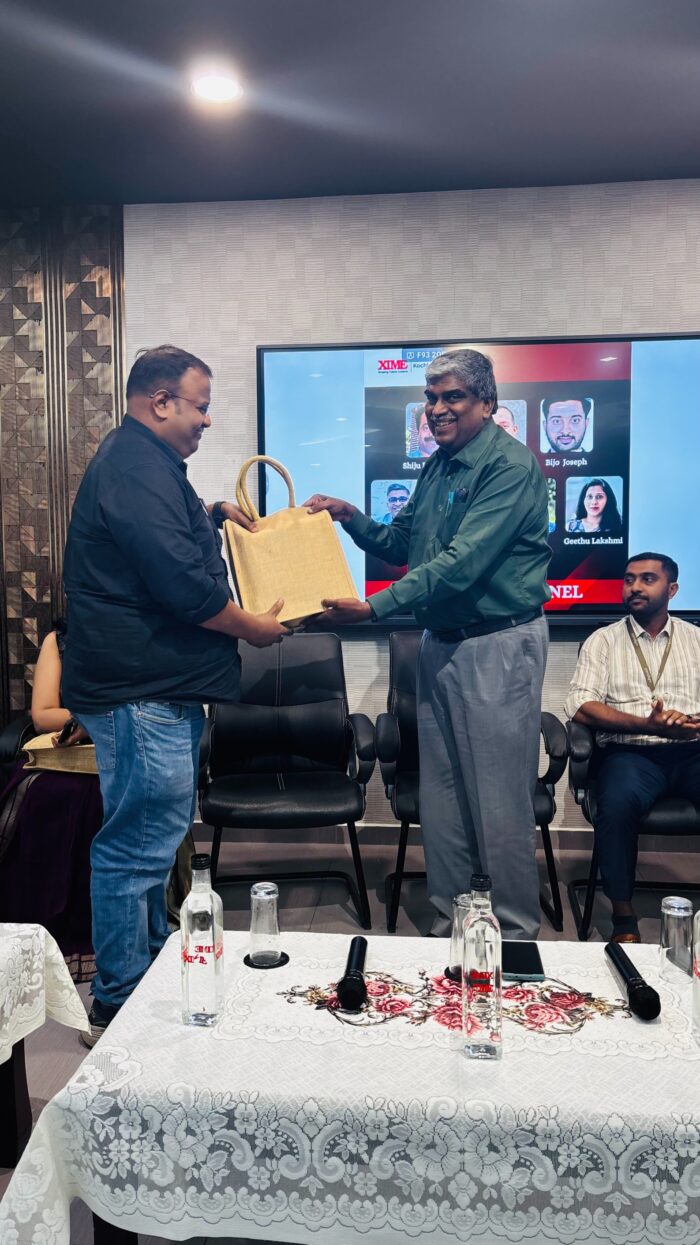
Arunanand T A (HR Bro) receiving a memento from Prof. A S Girish XIME Kochi
Arunanand T A (“HR Bro“) receiving a memento from Prof. A S Girish XIME Kochi

Also published on LinkedIn.

Leaves and Holidays in Kerala IT Companies

  1. Sick Leaves: Up to 12 days in a calendar. It can be less than 12 as well. Maximum 12 is defined in S&CE Act. Lapses on Dec 31 if unused.
  2. Casual Leaves: Up to 12 days in a calendar. It can be less than 12 as well. Maximum 12 is defined in S&CE Act. Lapses on Dec 31 if unused.
  3. Earned (Annual) Leave: 1 day per one month of service. It can be credited as 12 days when someone completes 1 year of service, and then every 30 days, 1 day should be additionally credited. You can also give 1 day/30 days from the beginning as well without having to wait for someone to complete 1 year of service. This is the only leave that is carried forward to the next calendar year. A minimum of 24 days should be allowed to be carried forward (though it can accrue, i.e. go beyond 24 within the calendar year). If someone has more than 24 days of Earned Leave balance on Dec 31, only 24 need to be carried forward to the next year. Companies can, at their discretion, increase this limit to 36, 48 or even more. At the time of exit, this leave balance should be paid to the employee in the full and final settlement (and it is tax-free up to 25 Lakhs). You can pay (per day basic pay * leave balance) for encashment. To arrive at the per day basic pay, you can divide the monthly basic pay by 26.
  4. Holidays: 4 mandatory national holidays (Jan 26, May 1, Aug 15, and Oct 2) + 9 festival or regional holidays = 13 days. If a mandatory holiday falls on a weekend, companies usually give an additional holiday to keep the total holidays as 13 in a calendar year. Companies can decide to allow more holidays. For the 9 festival holidays, companies can provide a larger list of holidays and call them restricted holidays (thereby allowing employees to choose 9 holidays of their liking, totalling the holidays to at least 13).
  5. Maternity Leave: 182 days of paid Leave. This is as per the MB Act.
  6. Sterilisation Leave (for vasectomy and the like): 6 days for men, 14 days for women and it is also a paid leave.
  7. Abortion/Miscarriage Leave: 6 weeks of paid leave.
  8. Paternity Leave: Not mandatory. Companies usually give 1-2 weeks of paid leave.

Also published on LinkedIn and Medium.

Software Engineer and Getting Paid below 17,742/- per month? Well, something’s wrong! Let’s look at the Minimum Wages!

I am sure your you were curious as to why the number 17,742/- for a Software Engineer when you clicked on the link to land this article. Let’s see in detail. By the way, if you are a software engineer in Kerala getting paid below this figure, it’s probably the time to send this article to your HR Manager 😉

Context

Recently, on Dec 24, 2020 to be exact, Government of Kerala announced the revised Minimum Wages for the Software industry in the state, after long 10 years of the earlier revision. Numbers have soared up. This article discusses the concept of minimum wages, with examples pertaining to Kerala state; however, the concept should be the same throughout the country.

What’s this “minimum wages”?

As the name implies, the minimum wages is the minimum wage per month to be given to an employee of a particular sector in a state. There is a national minimum wage declared by the central government, and various state-level minimum wages. The idea is to keep the state-level minimum wages equal to or above the national minimum wages. The concept of minimum wages will ensure access to equitable and justifiable pay, thereby eliminating the chances of exploitation by the management.

When is it decided?

Minimum wages are revised periodically. Minimum wages are defined for each sector separately. For example, the minimum wages for Software sector differs from that for the Oil Mills sector. There are roughly 80 such sectors identified for the State of Kerala; and similar numbers for other states as well. Governments revises the minimum wages when it deems that there is, inter alia, a significant increase in the cost of living over a period of time which is not manageable by a mere increase in Dearness Allowance (DA).

How is minimum wages calculated?

Minimum wage calculation for a role is easy. For example, look at the latest Software industry minimum wages notification for the State of Kerala below (extracted from here).

Kerala-Minimum-Wages-Notification-2020-Computer-Software-Industry

If you look at the notification, in the Software sector, roles of jobs are categorised into different grades. For instance, an HR Executive is a Group F employee in the industry, while a Software Engineer is a Group E employee. An organisation needs to categorise all their employees into one of these grades (and, if not already done by any means whatsoever before, it would be advisable to communicate the same through an HR letter/notice, through internal HR portals, payslips, etc. to the employee so that they are aware of the same) Let’s take the example of Group E: Software Engineer for illustration purpose.

Popular posts on this website

Demystifying the Minimum Wages Calculation: An Example

If you look at the Group E: Software Engineer, 16520-250-17770-300-19270 is the salary range shown for this role. What does that mean, let’s have a look!

The minimum wage for an employee who is a Software Engineer in an organisation is Rs. 16520. This amount is exclusive of another factor called Dearness Allowance (DA), which we will see about later.

Now, look at the number 250 in the wage structure. What does it signify? The notification says:

For every five years of completed or to be completed service in an establishment or under an employer, an annual increment at the rate next to the pay scale fixed in the new scale of pay shall be paid as service weightage to the employee concerned.

So, if an employee continues to be a Software Engineer under the same organisation/employer, then for every such service year, a minimum pay hike of Rs. 250/-pm should be paid as service weightage. That is, for someone with salary 16520/- as per month salary, and completed one year of service, s/he should get a minimum wage of Rs. 16520 + Rs. 250 = Rs. 16770/- pm during the second year of service. Every year, this figure per month will increase by Rs. 250/- for the first five years. Hence, s/he will have a wage of Rs. 17770/- pm during the fifth year of service. That’s the third number appearing in the pay structure.

Now, one can see a 300 next to 17770 in the pay structure. That means, we’re now done with the first five years and reached Rs. 17770/- pm as minimum wage for this employee. Hence for the next set of 5 years, the minimum wages should be increased for every service year by, not the old 250 but, Rs. 300/-. Hence, on the sixth year of service, the employee should have a minimum wage of Rs. 17770 + Rs. 300 = Rs. 18070/-. This will continue for the second block of 5 years. Hence, at the end of the 10th year (i.e. the fifth year of the second block), the employee should be getting a minimum of Rs. 19270/- pm as the salary. After the 10th year, the mandatory pay hike stops. If the employee gets promoted to a higher Grade, that’s a different story, in which case the minimum wages for that role will be applicable.

Image Courtesy: Investopedia

What if one gets more salary hike?

Good for them. The minimum wages talks about the minimum wages to be given, and the minimum pay hike to be given for every service years. If your pay is already above this level, then the employer is NOT obliged to give you the 250 or 300 pay hike.

Now, tell me about DA calculation?

Dearness Allowance is calculated based on an index called Consumer Price Index (CPI). I will skip the economy part and would encapsulate that it is a statistical number published by Dept of Economics and Statistics for various cities in the state, and it depicts the fluctuating cost of living. They publish it here.

DA is a mechanism provided to adjust the salaries for change in CPIs. If you look at the Minimum Wages notification, it says:

In addition to the basic rate of wages, all the employees shall be eligible for Dearness Allowance calculated on the basis of the Consumer Price Index published for the concerned District Head Quarters of the Department of Economics and Statistics at the rate of ₹ 26 (Rupees Twenty Six only) for monthly waged employees and ₹1 (Rupee One only) for daily waged employees respectively, for every point in excess of 300 points of the latest Consumer Price Index Number in the series 1998-99=100.

There are five parts to it:

  1. DA varies for each city (read district HQ)
  2. The rate of DA is Rs. 26/- for monthly waged employees
  3. DA is calculated for every point in excess of 300 points
  4. CPI is published periodically
  5. DA for this sector is calculated basis the CPI in the Series: 1998-99=100.

With these reading in mind, let’s calculate the DA for an employee posted in Trivandrum. Look at the CPI page on the EcoStat website and choose the latest month for which CPI is available. As I write this, it is Nov 2020. If you look at the Trivandrum’s CPI value under the column Estimated Indices for Base : 2011-12 = 100 Base : 1998-99 = 100 for Nov 2020, it is 369. That’s our little guy.

Now, we need to find out the DA from this 369. As per the #3 above, DA is calculated on the CPI-300 value. Here, it is 369-300 = 69.

We need to pay Rs. 26/- per month for every point in this 69. That means, the DA per month for an employee posted in Trivandrum is Rs. 26 * 69 = Rs. 1794/-

DA is paid over and top of the above minimum wage. DA may change when CPI changes.

Tip: An organisation need NOT provide DA as a pay structure component. They can subsume DA component in the gross pay and make sure that the gross pay is above the (minimum wages + DA) figure. But it would sound problematic for organisations who use the Wage Protection System, which mandates the DA component as such, in which case one may decide to keep that little guy in the pay structure.

Are we talking about Gross Salary or Basic+DA?

With the introduction of Code on Wages, 2019 (to be in force from Apr 1, 2021), all confusions with respect to the definition of wage will vanish. You may consider the Basic + DA + Other ordinarily paid allowances (other than OT, commissions, performance-based incentive, etc.) as the wage for this purpose, meaning we’re talking about the Gross Pay. Confused about Gross Pay, CTC, etc.? I’ll write about it in my next article 😉

Compliance is a Culture.

When is this to be effective from?

This notification is to be effective from Dec 18, 2020. Even if December 2020 and/or January 2021 salaries are already paid out by the employer, they are to abide by these changes. If there are revisions to be made as per this notification, then employers have to comply and give arrears wef Dec 18, 2020.

For the existing employees, if the salaries are to be revised to comply with this notification, then the employer must take care of the service weightage as well.

Where can I see minimum wages for other sectors?

Govt of Kerala published minimum wages notifications on this page. This is the old notification for the Software Industry.

An exercise

Well, now find out the minimum wages to be paid to a Senior Software Engineer with 3.2 years of experience in the current organisation in that grade, and posted at Calicut. Post your answers in the comment box and let’s see how many of you get it right 😉

This article is also published on LinkedIn and Medium.

Ordinance to make functioning easier: Kerala Shops and Commercial Establishments (Amendment) Ordinance, 2018

Kerala government recently published an ordinance amending certain provisions in the Kerala Shops and Commercial Establishments Act, 1960. There have been multiple amendment acts to the original said act, but this ordinance (which will hopefully be adopted as an amendment act by the next sitting of Kerala Legislative Assembly) comes with a purpose of easing the operations of Shops and Establishments while making it safer and humane for the employees. Let’s look at what are changing.

Definition of employee

The original act defines employee as ‘a person wholly or principally employed in, and in connection with, any establishment and includes an apprentices’. The new amendment extends this definition by suffixing ‘any class of persons as the Government may, by notification in the gazette, declare to be an employee for the purpose of this act.

Round the week functioning

The old act demanded that the shop/establishment should remain closed for at least one day per week, and such a day should be permanently displayed as a notice by the employer at a conspicuous location at the work place. Such a closed-day could not be altered by the employer for more than once in a period of three months, too.

With the amendment, the ‘shop/establishment must be closed for a day per week’ is removed, and it shrinks to allowing every employee to be entitled to one full day holiday per week, provided s/he has worked for at least 6 days in that week including all authorised leaves. This, in turn, allows the employer to function the shop/establishment round the week, with making the weekly holidays of employees rotate.

Curfew relaxed for women employees

The original acts mandated that no woman or any person who has not attained the age of seventeen shall be required or allowed to work whether as an employee or otherwise in any establishment before 6 A. M. or after 7 P. M.

The amendment relaxes the time limit from 7 PM to 9 PM. Here comes the historic change: the employer can now employ women employees between 9 PM and 6 AM (which was prohibited earlier) after getting the consent of such women employees. Further, such women employees must be working in a group of at least 5 employees wherein at least 2 are women.

Further, adequate security measures to ensure safety, honour, dignity, and protection from Sexual Harassment of women employees working during these hours should be ensured by the employer. Moreover, transportation from the workplace to the residence of such women employees should be arranged for by the employer (though the amendment does not provide that a security personnel accompany the women employees during this travel, it is implicit since the act talks about ‘safety’ measures—hence it would be wise to have the security measures as well taken care of during this travel).

Kerala’s IT Policy, earlier, gave relaxations to the above effects, but the amendment now extends this to all the sections of Shops and Establishments.

Scroll down to the bottom of this page for full version of the ordinance

Humane changes

There have been a lot of protests, especially from the textiles industry, regarding inhumane treatments by employers, where employees were not allowed to sit during work hours. Kerala Human Rights Commission had intervened in the issue long ago, and Kerala Government sympathised with the employees thus treated. With an insertion of a provision in the original act, 21B, the amendment officially and legally puts an end to such inhumane treatments

The amendment says that all the shops/establishments must provide suitable seating arrangements for their workers to avoid on-the-toe situations throughout the duty time. This will call for a drastic change in many of the industries coming under the definition of Shops/Commercial Establishments.

Fines gets finer!

The violation of various provisions in the act may now attract a fine of Rs. 1 lakh and 2 lakh respectively, which was as mere as Rs. 5000/- and Rs. 10000/- earlier. There are some changes to the calculation of such fine and fine for wilful obstruction of inspectors/labour/govt officers from carrying out their official duties, which are available in the PDF below.

Last but not the least – electronic age!

Earlier, employers needed to take special permission from the labour authorities before keeping employee data (muster rolls, payrolls, etc.) in digital format. This has been a point of debate by many, and the government is now forced to accept that things have really changed and people have started to migrate to the digital world, the condition of prior approval has been lifted in the amendment. Employers can now keep the data in digital formats as well, without any sort of permission/approvals.

Let me know your thoughts in comments! Below is the Amendment Ordinance. You can find the original act here.

Kerala-Shops-Commercial-Establishments-Amendment-Ordinance-2018

Regards,
Arunanand T A

error: Content is protected!!